
Blockchain in Banking: How Secure is Your Money?
Introduction
In the digital-first era, the banking and insurance industry is experiencing a technological transformation. Classic brick-and-mortar banks are fast embracing new solutions to improve security and convenience. Of course, blockchain is one technology that has captured the attention of many as a disruptor that will revolutionize financial security thinking. But what is blockchain banking, and is it really capable of securing your hard-earned cash in a world where cybersecurity is increasingly on the decline?
Understanding Blockchain Technology in Banking
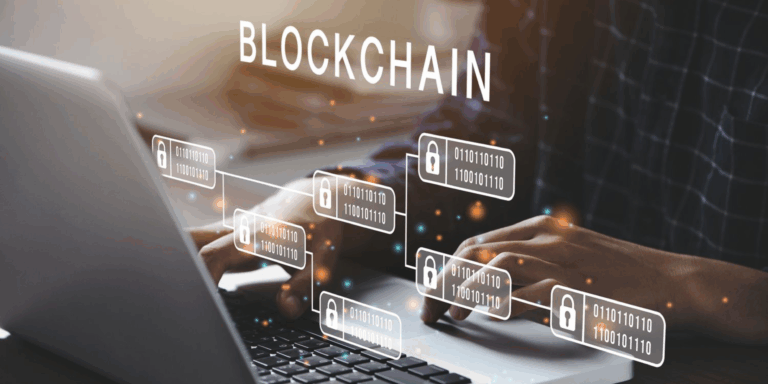
Blockchain is basically a digital ledger that is decentralized and records transactions on many computers. In contrast to the traditional insurance company systems where power is centralized, blockchain decentralizes control to all users, establishing what experts refer to as a “platform of truth and trust.” Every transaction constitutes a “block” that is connected to previous transactions, creating an immutable chain of data.
In finance, such technology disenfranchises intermediaries, shortening the time spent on transactions from days to seconds. According to a Santander report, the enormous effect: the widespread adoption of blockchain across industries can save banks and insurance providers infrastructure costs by a whopping $20 billion every year due to efficient securities trading, cross-border payments, and regulatory affairs.
Increased Security Through Decentralization
The BFSI (Banking, Financial Services, and Insurance) industry is increasingly subjected to threats such as malware, ransomware, phishing attacks, and identity theft. Traditional database systems tend to be inadequate to counter these sophisticated attacks.
Blockchain overcomes such weaknesses by offering a number of security features:
- Cryptographic encryption makes sure that once data is brought into the blockchain, it is almost tamper-proof
- Consensus mechanisms demand majority consent prior to any alteration in the ledger
- Distributed architecture implies that hackers must breach more than 51% of computers on a network at the same time—a highly unlikely task
- Immutable accounting has a stop to the possibility of double-spend money and produces an unchangeable audit trail
Instead of putting all security eggs in a single basket, blockchain spreads the risk among many nodes. This renders it extremely hard for spammers to breach the system.
Real-World Applications and Adoption
Several top-rated insurance companies and financial institutions already support blockchain technology. Bank of America’s Erica, American Express’s Amex Bot, and HDFC Bank’s EVA are innovative fusions of blockchain with chatbot AI to improve customer experiences with strong security.
Outside of day-to-day banking, blockchain is redefining securities transactions by eliminating intermediaries, lowering costs, and reducing market volatility. Shifting securities onto blockchain ledgers has the potential to slash global trade processing costs by at least $17 billion.
For cross-border payments, blockchain removes the convoluted network of intermediaries that now handle globally routed transactions, providing near-real-time settlement and dramatically lower costs.
Balance Between Privacy and Openness
Though blockchain provides unparalleled security, concerns regarding data privacy remain, particularly with fresh mandates such as the EU’s General Data Protection Regulation (GDPR). The technology’s inherent immutability—usually an advantage—can be at odds with “right to be forgotten” provisions.
New solutions involve holding sensitive data “off-chain” with the transaction records being kept on the blockchain, and “self-sovereign identity” ideas that allow individuals more control of their own information.
Is Your Money Really Safe?
Blockchain technology, if used correctly, provides security benefits far superior to conventional banking systems. No system can be said to be perfectly immutable or completely secure, but blockchain’s decentralized architecture and cryptographic underpinnings make it incredibly resistant to the threats that afflict the financial world today.
As this technology keeps evolving, we can anticipate even more powerful solutions that meet security, privacy, and regulatory needs in harmony—finally allowing you to be more confident that your money is safe in the digital world. Is your bank or insurance provider already on board with this revolution?